What Does The Alwoodley Parish Council Do?
There are many benefits to being part of a civil parish and having a parish council, but many people don’t know what these benefits are, or even that the Alwoodley Parish Council exists!
There are 31 civil parishes in Leeds, and some areas that are “unparished”. This page sets out to help people in the Parish of Alwoodley fully participate in and reap the benefits of having a Parish Council. The Alwoodley Parish Council is the level of democracy closest to you1, representing your voice to larger bodies like the Leeds City Council, and providing services, funded by a local tax called the “precept”, to improve the quality of life here in Alwoodley.
The Parish Council is Your First Level of Representation.
To properly represent you, the Parish Council:
- convenes an Annual Parish Meeting. The Parish Council is required by law2 to convene a meeting at which the electors (people registered to vote within the parish) can discuss local issues, receive a report from the Chair of the Parish Council, and make resolutions about matters that the Parish Council is then legally obligated to take up at the next Parish Council meeting.
- listens to residents who attend Parish Council Meetings, Planning Meetings, and consultations, and via email/website in order to and represent your concerns to the appropriate parties, including Ward Councillors and appropriate Leeds City Council Departments.
The Parish Council Supports Local Organisations.
The Parish Council enables local people to form groups and improve Alwoodley together. Some ways the Parish Council does this include:
- collaborating with local people and Leeds City Council to start, fund, and support projects and organisations such as Alwoodley in Bloom3 and Alwoodley Allotment Society4.
- providing several thousand pounds in grants to local organisations each year in order to meet the needs of the community.
- hosting events at which local groups can have stalls and activities to give more visibility to their work and to form connections between its members.

The Parish Council Represents Your Voice in Planning and Environmental Matters.
To represent you, the Parish Council:
- comments on planning applications. The Planning Committee of the Parish Council does not decide planning applications, but its views are taken into account by the Leeds City Council Planning Committee.5
- develops plans (e.g. neighbourhood plan6 and a biodiversity & sustainability plan) to inform planning comments and lobbying to Leeds City Council, the Combined Authority and the National Government. These plans also serve as a basis for grant applications, and inform decisions on how to to invest in the community through projects and funding.
The Parish Council Improves Maintains Green Spaces and Local Amenities.
To do this, the Parish Council:
- contracts with a Parish Ranger to help with local tasks such as tidying, light maintenance, managing formal planting and mini-flower bed, installing log piles, clearing bracken, or other measures to improve biodiversity, and other performing tasks to keep areas safe and welcoming. Request help from the Parish Ranger via our Parish Ranger / Caretaker job request form.
- provides and maintains assets such as benches, memorials gardens, playground equipment, and noticeboards.
- funds the creation of meadows or large scale bulb-planting schemes that Leeds City Council or local groups install and manage.
- contributes towards the cost of footpath improvement and the development of new footpaths and bridleways.
- Note that the Parish Council does not own any land, so it works in partnership with Leeds City Council. It does have the power to purchase and manage land.7
The Parish Council Works to Make Alwoodley a Great Place to Live in and Visit!
To do this, the Parish Council:
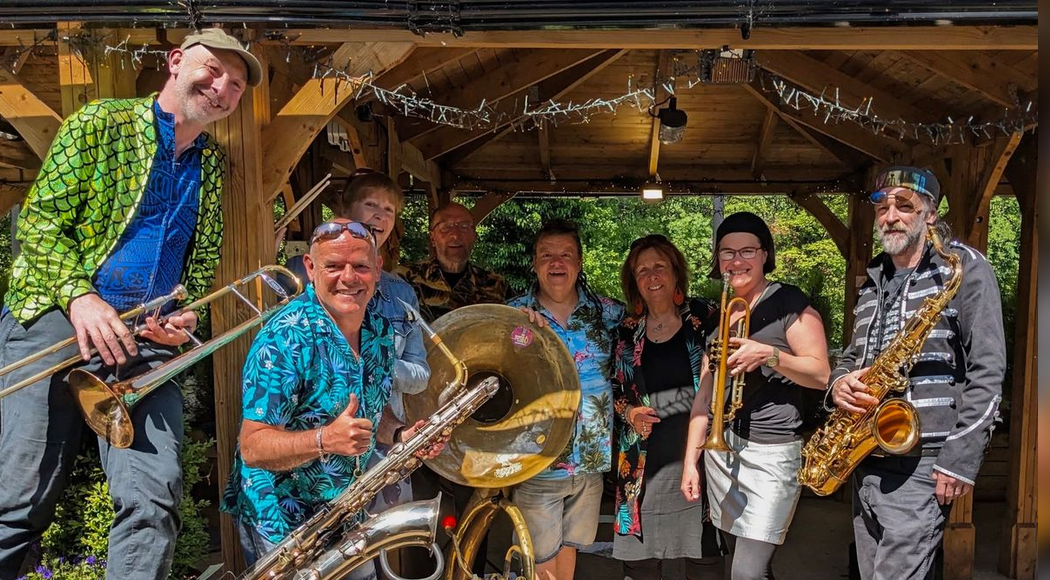
- hosts local events such as band concerts, community picnics
- funds the installment of festive lights to brighten up the darker months and bring joy to the community
- runs special events and initiatives to celebrate the community and promote local business.
The Parish Council is Open and Transparent.
To cultivate trust, participation and transparency, the Parish council
- maintains a Transparency & Accountability Page so that everything related to governance and finances is available to the public.
- publishes upcoming meeting dates and invites the public to participate in them. You are very welcome to attend. If you’d like to speak, just contact the.clerk@alwoodleyparishcouncil.go.uk to be added to the agenda.
- publishes upcoming Parish Council Meeting Agendas and papers in advance and posts the minutes for all to see.
- publishes Planning Committee (agendas & information). This committee comments on applications that are decided by Leeds City Council’s Planning Committee. Info on that process is here.
- posts all councillor registers of interest
- PACT Meetings – To raise concerns with the Police.
What the Parish Council Doesn’t Do
The Parish Council does a lot, but there’s a limit to what it can do. Some issues sit with other authorities. The Parish Council doesn’t manage:
- Highways and traffic (road repairs, speeding, gritting, street lighting, new crossings)
- Rubbish and recycling collections
- Fly-tipping, graffiti, and street cleaning
- Council Tax, benefits, housing, and schools
- Policing and anti-social behaviour
- Public transport services
- Tree protection and enforcement of planning rules on tree works
- Set planning rules or approve planning applications.
Who to contact instead
| Service | Who to Contact | Link / Phone |
|---|---|---|
| Leeds City Council (general enquiries) | Main customer services | 📞 0113 222 4444 / 🌐 www.leeds.gov.uk |
| West Yorkshire Police | Non-emergency reporting | 📞 101 / 🌐 Report online |
| Rubbish, bins & recycling | Leeds City Council – Refuse Service | 📞 0113 222 4444 / 🌐 Bins & Recycling |
| Highways issues (road, pavement, enforcement) | Cleaner Neighbourhoods Team – Highway Enforcement | 📧 cleanerneighbourhoods@leeds.gov.uk 🌐 Report a road or pavement issue form |
| Street lighting, potholes, gritting | Leeds Highways | 🌐 Report online |
| Fly-tipping & graffiti | Leeds Environmental Health | 🌐 Report fly-tipping |
| Trees (Tree Preservation Orders, illegal works, felling concerns) | Leeds City Council Landscape Planning Team | 📧 landscape.planning@leeds.gov.uk (to look up tree protection orders, report illegal work on protected trees) 📞 0113 378 6002 (Mon–Fri, 8am–5pm) / 0113 376 0499 (out of hours emergencies) 🌐 Tree works and preservation guidance |
- The Council operates primarily under the Local Government Act 1972, specifically Schedule 12. ↩︎
- Local Government Act 1972, Schedule 12, Part III, Paragraph 14 ↩︎
- Local Government Act 1972, Section 144 allows a Parish Council to undertake activities for the promotion of tourism and local interest. ↩︎
- Small Holdings and Allotments Act 1908 requires – this is a statutory duty – that if there is a demand for allotments that the Parish Council find a way to meet that demand. ↩︎
- Town and Country Planning Act 1990, Schedule 1, paragraph 8 grants Parish Councils the right to be notified of planning applications in their area. The Parish is a Statutory Consultee. This means Leeds City Council is legally required to take the Parish Council’s views into account before making a final decision. ↩︎
- Localism Act 2011, Schedule 9 gives parish councils the authority to lead the creation of a Neibhourhood Development Plan. Once residents vote for it and it is adopted by Leeds City Council, that body, and the National Government, must legally consider the plan’s policies when making planning decisions in Alwoodley. Having a plan also increases the Parish’s share of the Community Infrastructure Levy (CIL) from 15% to 25% ↩︎
- Open Spaces Act of 1906 https://www.legislation.gov.uk/ukpga/Edw7/6/25/data.html ↩︎